

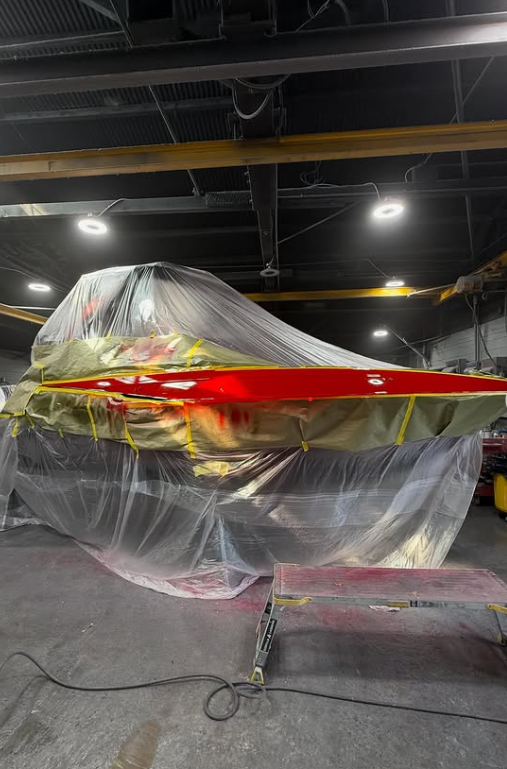
Boat Painting & Color Match Repair, Stockton, CA
Custom tinted marine paint and gelcoat matched to your hull's exact color. Spot repairs that disappear. Full repaints that look factory-fresh.
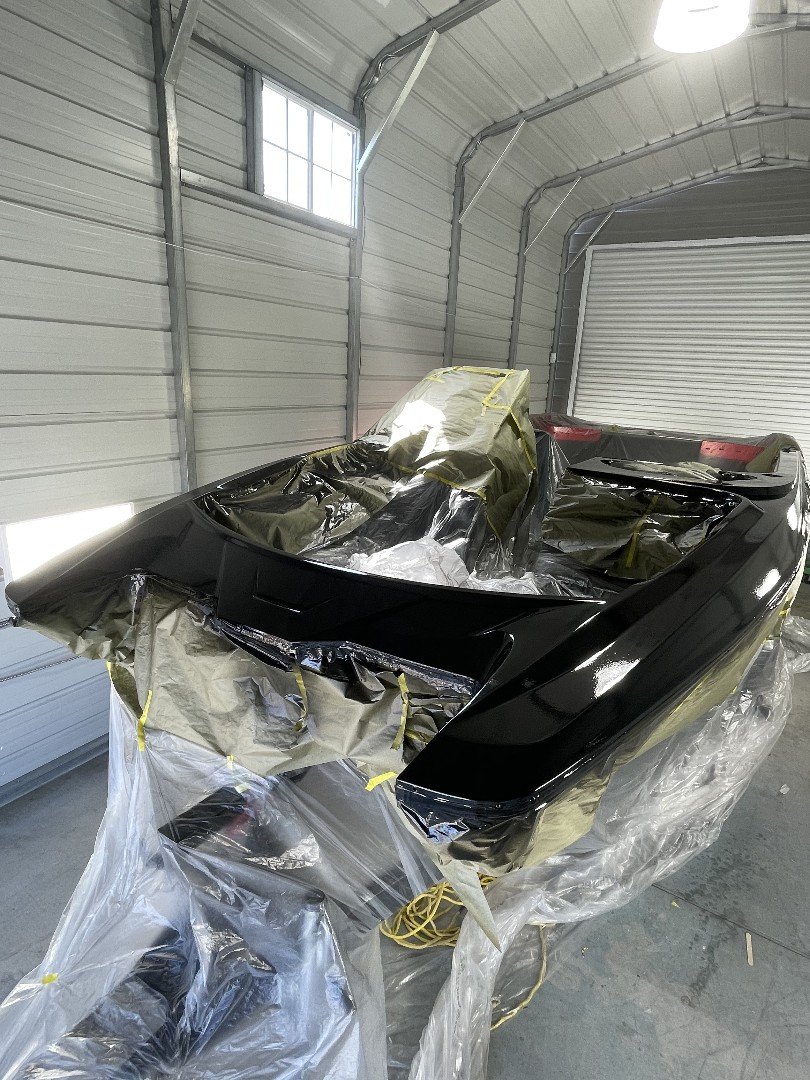
The hardest part of boat repair isn't the fix, it's the finish. Anyone can fill a crack. The difference between a $200 repair that looks like a repair and one that looks like it never happened is color matching, application, and finish work. That's what we specialize in. Whether you need a small spot repair after a dock kiss or a full hull repaint to bring back your boat's life, we approach every paint job like it's our own boat going back in the water.
Areas we serve

Color Match Spot Repair
Damage gets repaired, then we mix gelcoat or marine paint to your boat's exact color and blend the spot. Ideal for dock damage, gouges, impact dings, or any repair where you want the fix invisible.
Hull Repaint
Full topside or hull-side repaint with marine-grade two-part polyurethane. Long-lasting gloss, UV-stable, and built to handle Delta sun and water for years.
Custom Color Change
Changing your boat's look entirely? We strip, prep, and paint with the color and finish you want solids, metallics, or pearl. Includes color consultation before we spray.
Striping, Graphics & Lettering
Pinstripes, accent stripes, registration numbers, and custom boat names, painted or vinyl, color-coordinated with the hull.
The boats we paint
Different boats bring different paint challenges, and we handle the full range on the Delta. Wake and ski boats with deep metalflake and pearl gelcoat, the hardest finishes to match and where we do some of our best work. Bass boats with high gloss flake that has to blend perfectly or it flashes in the sun. Fishing boats and runabouts that take dock rash and need clean spot repairs. Pontoons, where the fiberglass console and accents get refinished. And larger cabin cruisers that often want a full topside repaint to bring back years of faded gloss. Whatever you run, we match the finish your boat already wears and spray it to last.
Services
How we match colors
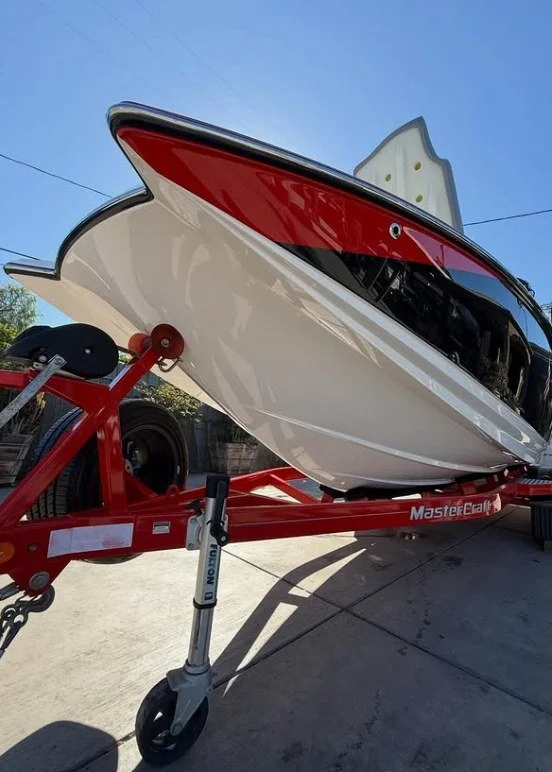
A 10 year old hull is never the same color it was the day it left the factory UV fades it, oxidation changes the tone, water minerals affect it. We don't pull a factory color code. We sample your hull's current color, account for surrounding sheen and finish, and custom mix gelcoat or paint to match what's actually there. That's why our repairs blend in instead of standing out.
It's the difference between a repair you forget about and one you notice every time you walk the dock.
Why matching metallics and metalflake is the real test
Solid colors are the easy part, almost anyone can blend a white or a navy. Where shops fail is metallics, pearls, and the deep metalflake on wake and bass boats. With those, it isn't just the color that has to match: the flake size, how the flake lies, and the depth of the clear over it all have to match too, or the repair flashes in the sun even when the base color is dead-on. We sample all of that and spray to match it, which is why our metallic and flake repairs blend instead of glittering in a slightly different way than the rest of the hull.
Prep is 80% of a paint job
A repaint lives or dies on what happens before any color is sprayed. The gloss, the smoothness, and whether it lasts all come from sanding, fairing, priming, masking, and dust control, not from the can. A paint job that orange-peels, peels, or fails early almost always failed at prep, not at the paint. We don't shortcut that stage, which is why our finishes lay down flat and hold up to Delta sun and water instead of lifting after a season.
What a paint job actually looks like, start to finish
Most owners have never watched a marine repaint happen, so here is the real sequence behind a finish that lasts.
1. Inspect and plan. We look at the damage, the surrounding finish, and how the boat is used, then tell you whether it's a spot repair, a panel, or a full repaint.
2. Strip and sand. Old failing finish, oxidation, and surface contamination come off, because new paint is only ever as good as what's under it.
3. Fair and prime. Low spots and imperfections get filled and faired flat, then primed, so the final coat has a perfect surface to lay onto.
4. Mask and control dust. We mask hardware and lines and control the spray environment, because a single piece of grit is the difference between glass smooth and gritty.
5. Spray and cure. Color goes on in controlled coats and is allowed to cure properly, rushing the cure is how finishes fail early.
6. Buff and reveal. We wet sand and buff to an even gloss, then hand the boat back with a finish that reads as one continuous surface.
Why we use marine paint, never auto paint
It's a shortcut some shops take, and it always shows eventually: spraying a boat with automotive paint. Cars don't sit in standing water, bake in unbroken sun all summer, or flex the way a hull does in chop. Marine two part polyurethane is built for exactly those conditions, it stays UV stable, resists water spotting and chemical exposure, and keeps its gloss for years instead of chalking after a season. Auto paint can look great in the booth and then fade, lift, or blush once the boat actually lives outside on the Delta. We spray marine grade systems only, because the whole point of paying for a repaint is that it still looks new two and three summers from now.
What goes into the price of a paint job
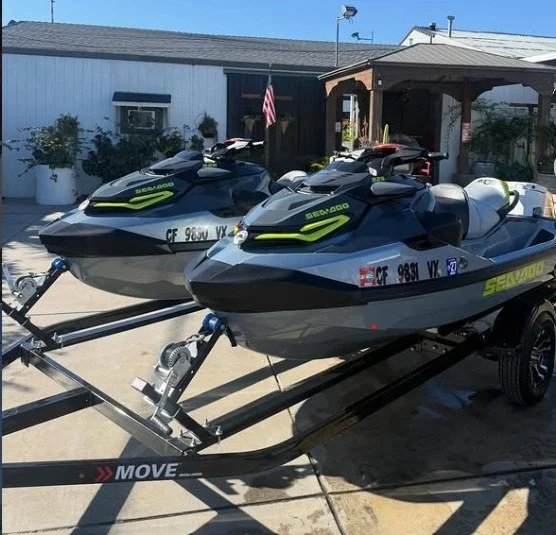
Because every boat is different, a paint quote is built on a few things, and it helps to know what they are. The size of the area is the obvious one, a single spot repair is a fraction of a full hull repaint. Color is the next: a solid white blends quickly, while a metallic, pearl, or deep metalflake takes more time and skill to match and is priced accordingly. The condition underneath matters too, because a hull that needs heavy fairing and prep is more work than one that's already sound. A full color change adds stripping and consultation on top. We walk you through which of these apply to your boat when we quote it, so the number makes sense and you can decide what to do now and what can wait.
When to paint vs. restore
Whatever we recommend, it's the option that protects your boat's value, not the one that costs you the most.
Not every faded boat needs paint. Many faded gelcoat hulls can be restored through compounding and polishing cheaper, faster, and just as effective. We'll inspect your hull first and tell you straight: restore, spot-repair, or paint. Whichever saves you money and lasts
Gelcoat or paint, which your repair actually needs
These are two different materials for two different jobs, and using the wrong one is a common mistake. Gelcoat is the original surface on most boats and the right call for hull side and below the rubrail repairs, it's repairable forever and matches what's already there. Two part marine polyurethane (the topside paint we use) is the right call for full repaints, color changes, and topsides that need a harder, glossier, UV-stable finish. We pick based on where the damage is and what your boat already wears, and we tell you why.
Protecting a fresh finish so it lasts
A new repaint or gelcoat repair is an investment worth protecting from day one. Sealing it, with wax or, better, a ceramic coating, and keeping up with regular washes is what holds the gloss and the UV protection, especially on a boat that lives in the Delta sun. Skip that and even a great paint job dulls faster than it should. We'll tell you the simplest way to keep the finish looking the way it did the day you got the boat back.
FAQ
How long does a paint job take?
Spot repairs: usually 1–2 days. Full repaint: 5–10 days depending on size, prep needed, and weather. We'll always give you a firm timeline before starting.
What kind of paint do you use?
Two part marine polyurethane (Awlgrip, Alexseal, Spectrum, or equivalent depending on the job) for topside work. Spectrum marine grade gelcoat for hull side and gelcoat repair work. No auto paint, no shortcuts.
Can you match metalflake, pearl, or metallic colors?
Yes, those are the hardest matches in the business and our specialty. We match the flake, the color, and the clear depth so the repair disappears.
Will a marine repaint peel or fade?
Not when it's prepped right and sprayed in two-part marine polyurethane. The repaints that peel or chalk failed at the prep stage, which is exactly the part we don't shortcut.
How long does a quality marine repaint last?
Years, with two part polyurethane and normal care. Sealing and regular washing extend it further by protecting the finish from UV and water spotting.
Do you paint at my slip or at the shop?
Full repaints and color changes are done in our controlled shop environment, where dust and weather can't ruin the finish. Small spot repairs can be more flexible, send a photo and we'll tell you.
Do you also do bottom (antifouling) paint?
Yes, but that's a separate service from topside painting, see our bottom-painting page. It protects the hull below the waterline on slip kept boats.
Can you help me pick a new color?
Yes. A custom color change starts with a consultation, we'll talk through solids, metallics, and pearls, show you how each reads in the Delta sun, and help you land on a finish you'll still love in a few years before we ever spray.
Can you fix a bad repaint from another shop?
Usually, yes. Orange peel, overspray, a patch that flashes, or a finish already lifting almost always traces back to prep. We assess what's underneath, correct it, and re spray it the right way so it lasts.
Can you match and repaint faded stripes or graphics?
Yes. We color coordinate stripes, accents, and lettering to the hull, painted or vinyl, and can refresh sun faded graphics so the whole boat looks consistent again, not just the repaired panel.
Insurance claim repaints, documented for your adjuster
Dock collision, trailer mishap, or storm damage to the finish?
We handle claim work regularly.
We provide detailed, itemized estimates that most marine carriers accept, and we document the damage and the finished repair so your adjuster has exactly what they need. You get the same color matched, marine grade result whether it's a claim or out of pocket, the paperwork just gets handled alongside the paint.
Send us a photo and we'll tell you whether you need a repair, a restoration, or a repaint.