

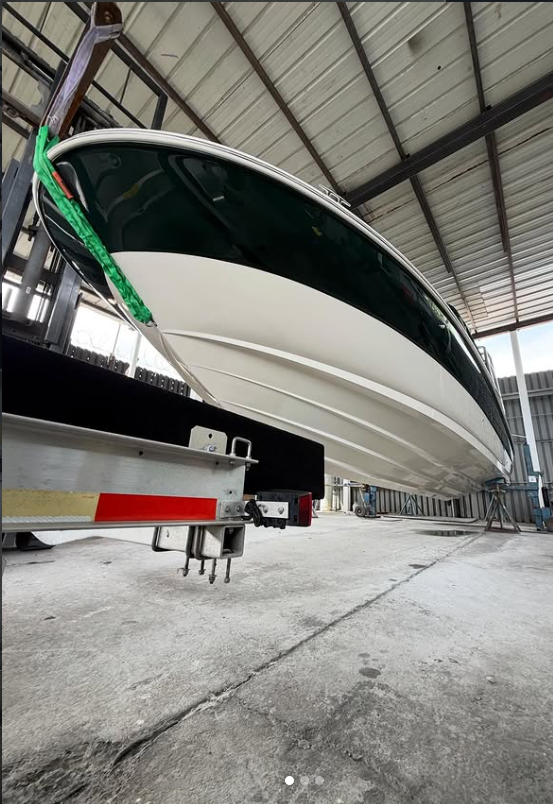
Fiberglass Repair & Gelcoat Restoration in Stockton, CA
From hairline cracks to deep gouges and fully oxidized hulls, restored to factory new and color matched so the repair disappears.
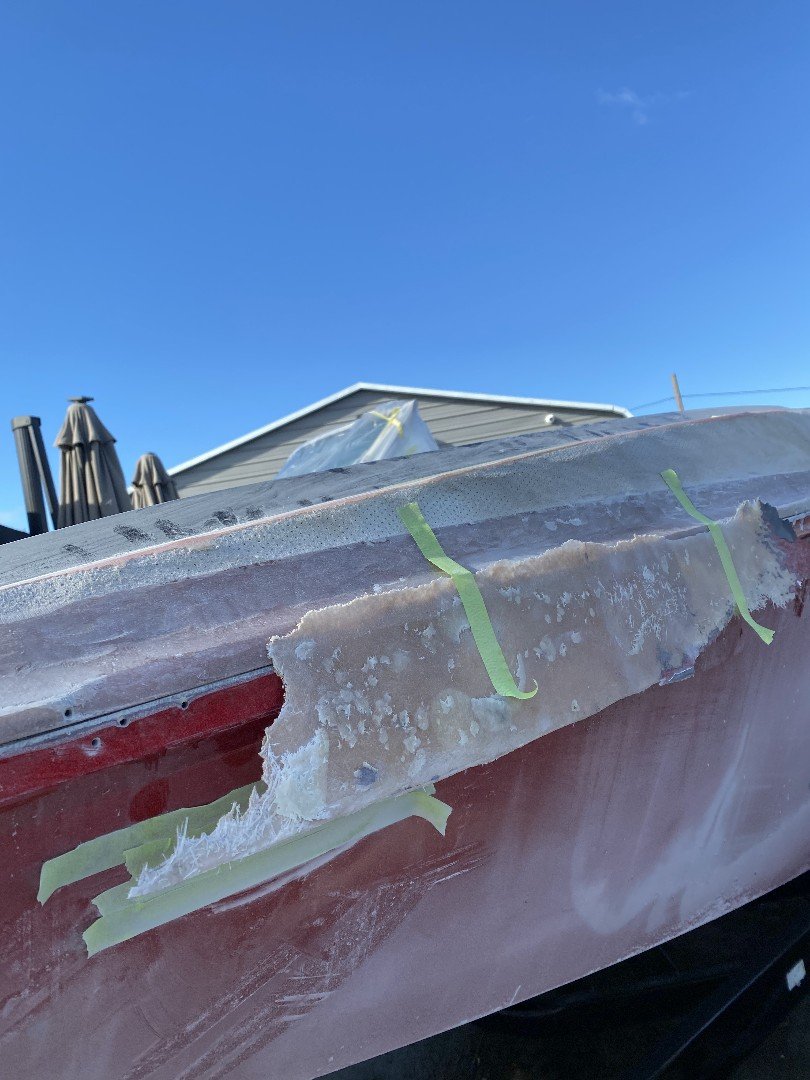
Done the right way: ground out, layered, cured, and faired, so it's solid for years, not just for the season.
Why a small crack can't wait
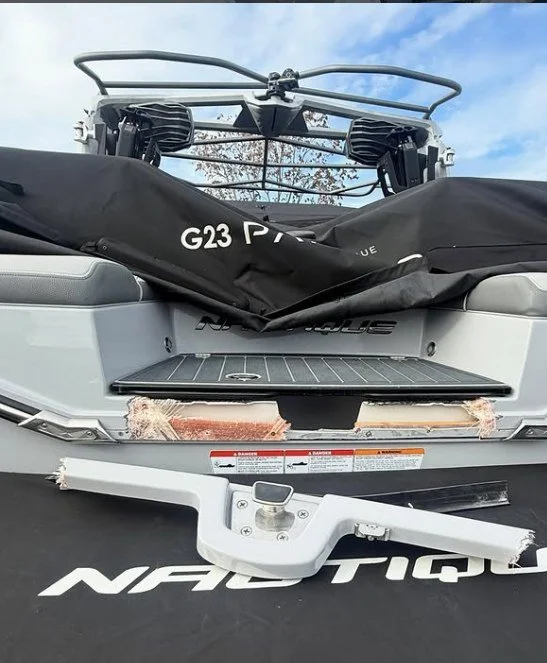
Fiberglass damage doesn't fix itself, and ignored, it gets expensive. A hairline crack lets water in, the water finds the laminate, and what was a $200 cosmetic patch becomes a $2,000 structural job. The fix is straightforward when you catch it early, and we'd rather see your boat sooner than later. We've repaired everything from scraped gelcoat to impact damaged transoms. Every repair is built the right way: ground out, layered, cured, faired, and color matched so the boat looks like it never happened
Structural repair: transoms, stringers, and soft spots
Your “damage we fix” list names transom, stringer, and delamination work, here's what that actually involves, because structural repair is a different animal from a cosmetic patch. The transom is what your motor hangs on; once it flexes or cracks, it only gets worse, and it's a safety issue, not a looks issue. Stringers and bulkheads are the boat's skeleton under the deck. A soft, spongy spot underfoot means water has gotten into the laminate and the glass has separated (delamination).
We don't skin over any of it. We open the area to clean, sound glass, rebuild with the right schedule of cloth and resin for the load that part carries, and fully cure each layer before the next, so the repaired area is as strong as the boat was built to be, not just sealed for the season. If a shop offers to “fill” a soft transom in an afternoon, walk away.
Why Delta boats crack in the first place
Knowing the cause is how you catch damage while it's cheap. Around Stockton and the Delta, most of what we repair traces back to a few things: ramp launches and trailering, which chip keels and crack corners on impact; brackish Delta water, which finds any hairline crack and works into the laminate; and relentless Central Valley sun, which makes older gelcoat brittle so it spider cracks and chips more easily. None of it is unusual, but all of it is cheaper to fix early, before water turns a cosmetic chip into a structural job.
Damage we fix every week
Marine grade materials, and why they matter
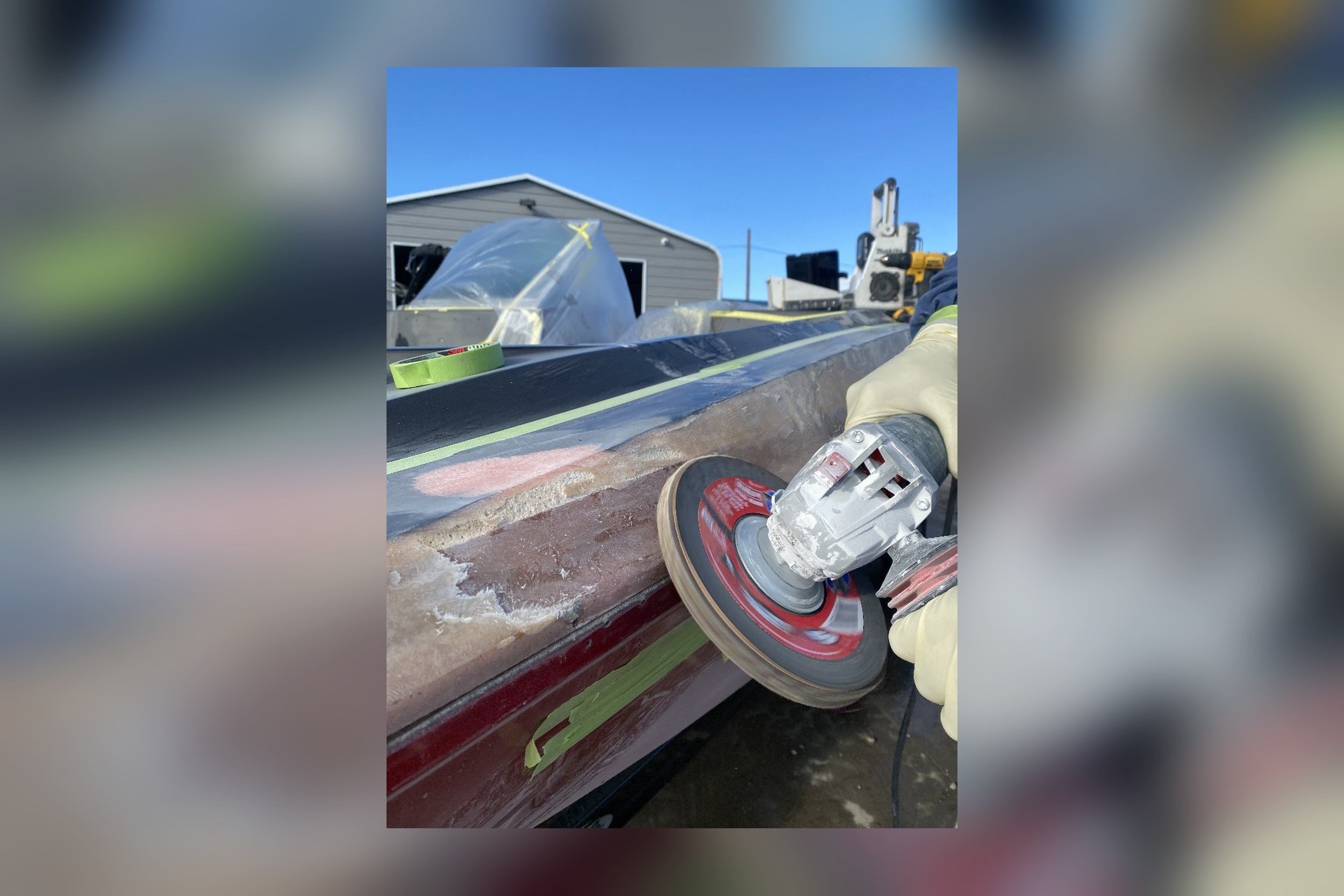
What a repair is made of decides how long it lasts. We build with marine resins and cloth matched to the damage and the load, not hardware-store body filler or auto products that look fine on day one and fail once they're back in the water. Each layer is fully cured before the next, and the surface is faired true before any color goes on. That's the difference between a repair that holds for years and one that telegraphs a crack or lifts after a few months in the Delta.
Why a DIY fiberglass patch usually comes back
We get a lot of boats that were already “fixed” once with a hardware-store kit, and the pattern is almost always the same. The patch skinned over the surface without grinding back to sound glass, so the crack underneath kept spreading. The edges were not tapered, so the new material never truly bonded. And moisture got trapped inside, so the laminate kept softening behind a repair that looked fine on top. A fiberglass repair holds or fails based on what happens below the surface, which is exactly the part a quick patch skips. When we redo one of these, we remove the old patch entirely and rebuild it properly, so it is the last time that spot needs attention.
The moment you spot damage, what to do
If you see a fresh crack or gouge, keep the boat dry and covered if you can, and don't launch with an open crack below the waterline, that's how water gets into the glass. Then text a photo. We'll triage it fast: tell you whether it's cosmetic or structural, whether it's urgent or can wait, and what it'll take. Catching it at the photo stage is almost always the difference between a small, affordable fix and a big one.
• Spider cracks (stress fractures in gelcoat)
• Gouges, scratches, and impact dings
• Cracked corners and rub-rail damage
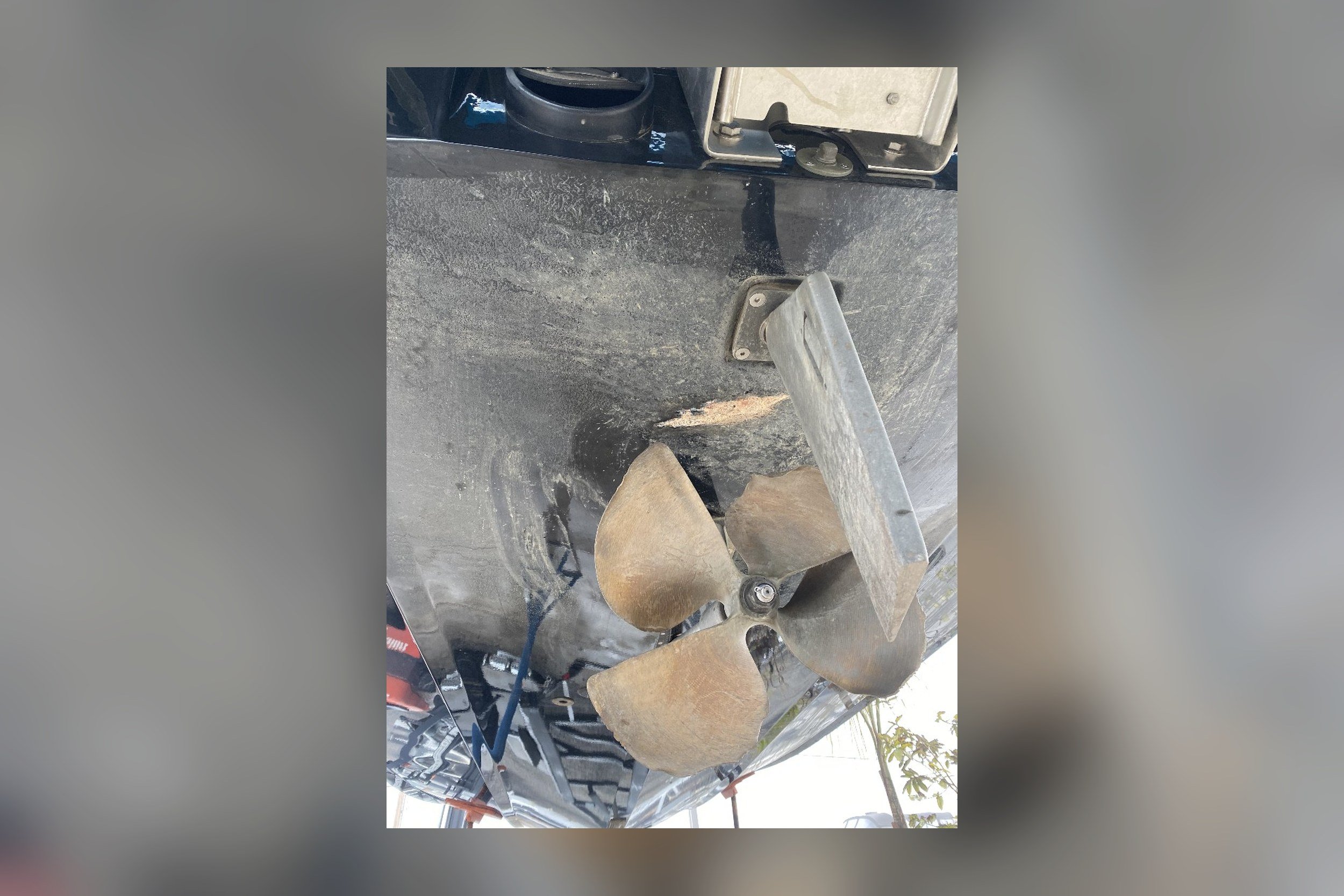
• Through-hull and waterline damage
• Soft spots and delamination
• Transom cracks and stress damage
• Stringer and bulkhead repair
• Heavy oxidation, chalking, and color fade
• Insurance-claim repairs (we work with most carriers)
The boats we repair, and the fiberglass quirk of each
Fiberglass behaves differently from boat to boat, and we repair the full Delta fleet. Wake and ski boats carry deep metalflake gelcoat that is beautiful and unforgiving, the repair has to match flake and depth, not just color. Bass boats take a lot of trailer and ramp abuse, so we see chipped keels and cracked corners. Fishing boats and runabouts get the everyday gouges and dock dings. Pontoons bring fiberglass consoles and nose cones rather than full hulls. Jet skis and other personal watercraft tend to crack at the hull seams and footwells. And big cabin cruisers often need real structural work, transoms, stringers, and below deck laminate, on top of the cosmetics. Whatever you run, we match the repair to how that hull is built and how you use it.
OUR PROCESS
1. Assessment
We meet you, look at the damage, test for hidden delamination or moisture if needed, and give you a firm quote and timeline before any work starts.
2. Prep
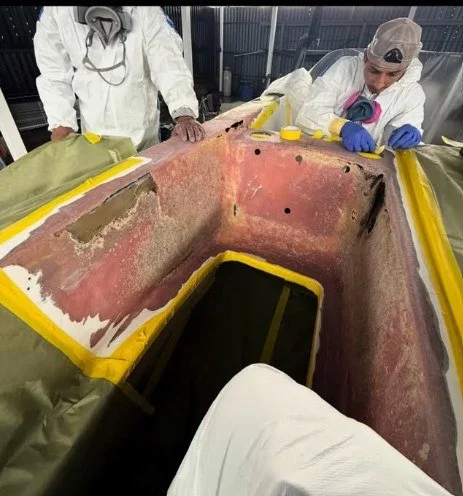
We grind out the damaged area to clean glass, taper the edges so the new layer bonds properly, and protect the surrounding hull. No shortcuts.
3. Repair
We layer fiberglass cloth and marine-grade resin appropriate to the damage type structural or cosmetic. Each layer is fully cured before the next.
4. Color match & finish
This is where most repair jobs go wrong, and where we shine. We mix gelcoat (or marine paint, on painted hulls) to match your boat's exact color, apply, sand, and polish to a glass finish that disappears into the surrounding hull.
5. Final walk-through
We text you before-and-after photos, walk through any care instructions, and stand behind our work. If you can find the repair line, we'll buy you a tank of fuel
What goes into the price of a fiberglass repair
A fiberglass quote is built on a few things, and knowing them up front makes the number make sense. Cosmetic work, a gouge, a spider crack, a scraped gelcoat edge, sits at the affordable end. Structural work, like a cracked transom or soft stringers, costs more because there is real rebuilding and cure time underneath. The size and number of damage spots matter, as does access: whether the area is easy to reach or buried under a deck or below the waterline. Color complexity is the last piece, since a metalflake or faded custom color takes more to match than a solid white. We walk you through which of these apply when we quote your boat, so you understand the price and can decide what to handle now and what can wait.
Protecting a fresh repair so it stays solid
Once a repair is cured, faired, and color matched, a little care keeps it that way. Give the area the full cure time we recommend before hard use, keep a wax or sealant on the finish so the Delta sun does not chalk the new gelcoat, and keep the boat covered when it sits. If the repair was near the waterline, just keep an eye on it through the first season and let us know if you ever see a hairline return, rare when it is built right, but easy to catch early. Done properly, a fiberglass repair should outlast the hull around it, not become a spot you have to keep revisiting.
Areas we serve
Faded, Chalked Gelcoat? We Bring It Back
Gelcoat oxidation is what happens when UV breaks down the top layer of your hull. The boat looks dull, chalky, and faded, sometimes splotchy. The good news: in most cases, it's correctable without paint. Our gelcoat restoration is a three-step process, heavy compound cuts the oxidation, polish refines the surface, and a sealing wax locks in the gloss. The result is the boat's original color and shine. Lasts a full season with proper care
Blisters and osmosis below the waterline
Boats that live in the water can develop blisters, small bumps under the gelcoat where moisture has worked into the laminate and formed pockets. Left alone, osmosis spreads, the blisters multiply, and what looks cosmetic is actually water sitting inside your glass. Fixing it the right way means hauling the boat, opening and drying the affected laminate, and rebuilding with the proper resin before the area is faired and sealed, not just grinding off the bumps and painting over them. If your slip kept boat is showing a rash of small blisters along the bottom, send a photo. The sooner osmosis is dealt with, the smaller and cheaper the repair.
COMMON QUESTIONS
Is this a cosmetic repair or a structural one?
We'll tell you straight after the inspection. Cosmetic repairs are about restoring the look. Structural repairs involve damage that affects the boat's integrity, and those need to be done properly with the right materials and cure times. Don't trust a shop that doesn't make that distinction.
Do you handle insurance claim repairs?
Yes. We provide detailed itemized estimates that work with most marine insurance carriers Geico Marine, Progressive, Boat US, and others. We can also send before/after documentation directly to your adjuster.
Can you really color match my hull exactly?
Yes, that's the whole point of the service. We sample your hull's current color (accounting for UV aging), mix gelcoat or paint to match, and apply in light coats. Most repairs are invisible at arm's length.
How long does a fiberglass repair take?
Most cosmetic repairs are 1–4 days. Structural work (transom, stringers) takes longer because the layers have to cure fully, we won't rush a cure. You always get a firm timeline before we start.
Can you fix a soft or spongy spot in the deck or floor?
Yes, that's delamination, where water has separated the glass. We open it up, dry it out, rebuild the laminate, and refinish so it's solid underfoot again.
Will the repaired area be as strong as the original?
On a structural repair, yes, we rebuild to the schedule of cloth and resin the area needs, fully cured, so it carries the same loads it was built for.
Can you match metallic or metalflake gelcoat?
Yes. Metalflake and pearl are the hardest finishes to match, and that's exactly our specialty, we match the flake, color, and clear depth so the repair disappears.
Do I need to haul the boat out for a fiberglass repair?
It depends where the damage is. Above the waterline work is often handled at the shop or dockside; damage below the waterline (or blistering) needs a haul out. We'll tell you which when you send a photo.
Can you repair a hole that goes all the way through the hull?
Yes. A puncture or through-hull crack is rebuilt from both sides wherever we can access it, layering new glass and resin to restore the original strength and shape, then faired and color-matched so the hull looks and performs like it was never holed.
My boat is older, is it even worth repairing the fiberglass?
Usually, yes. Fiberglass does not have an expiration date; a sound older hull is often worth far more repaired than what it would cost to replace, and a proper repair protects both safety and resale. We will tell you honestly if a boat is too far gone, but most are not.